How Dental Practices Can Convert More New Patient Calls
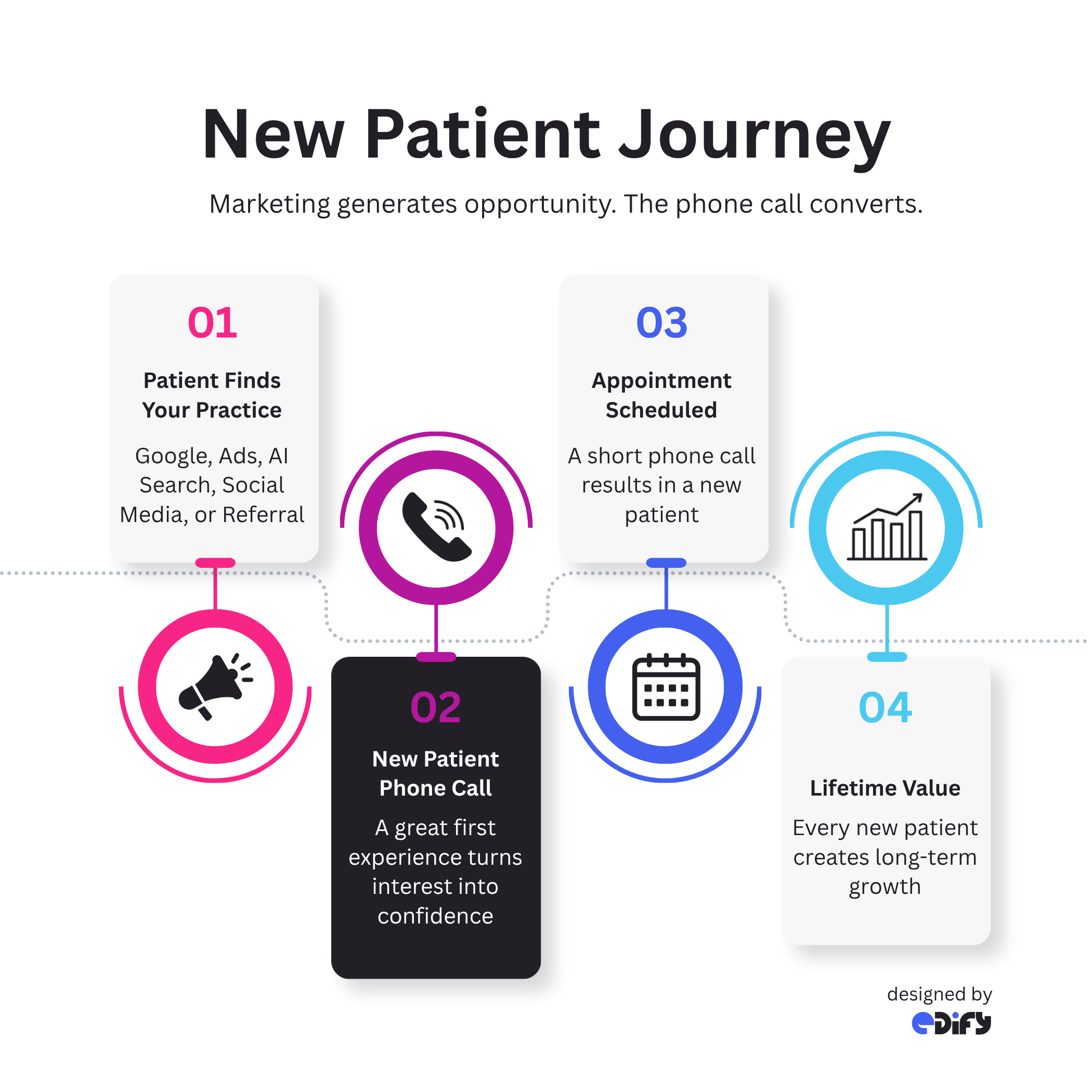
Every new patient phone call represents thousands of dollars in potential lifetime value. Yet many dental practices spend heavily on marketing only to lose prospective patients because the receptionist or front desk team member isn’t prepared to convert phone calls into booked appointments.
If your practice receives plenty of phone calls but your schedule isn’t filling as quickly as expected, your phone conversion process may be the missing link.
Why New Patient Phone Calls Matter for Dental Practice Growth
Before tackling the “how-to”, let’s talk about why phone calls still matter in a digital world. With all the online scheduling platforms and digital touch points available to help dental offices convert more new patients, live phone conversations remain one of the most effective ways to convert prospective patients into scheduled appointments.
First of all, scheduling a dental appointment induces anxiety in many potential patients. In fact, a recent nationally representative study published in JADA found that nearly 73% of adults report some level of fear about going to the dentist. For those patients, a warm, professional phone conversation can make all the difference in setting your practice apart and building trust. Answering the phone, treating people with courtesy, and demonstrating professionalism puts anxious patients at ease and proves that your practice is truly a patient-centered office.
Also, patients who make phone calls are typically commitment-oriented rather than simply “browsing”. Price-shoppers may hop from practice to practice based on deals and convenience, but patients representing the highest lifetime value are looking for a dental home. Patients who take the time to call your office are often further along in the decision-making process than someone casually browsing online. They're evaluating whether your practice feels like the right long-term fit for their dental care. That first conversation can either build the confidence they need to schedule an appointment or reinforce their decision to keep looking.
Whether a patient found your dental office through Google, an A.I. chat, social media or a referral, the person who answers the phone has the unique opportunity to turn months of marketing and reputation-building into a booked appointment. The good news is that phone conversion is a skill that can be learned. Now let’s take a look at the key elements your front desk staff needs to be proficient in in order to handle every call like a pro and set those initial appointments.

3 Essentials for Handling Inbound New Patient Calls
Use Friendly and Professional Phone Etiquette
This may seem obvious, but answering the phone with an inviting, friendly, and confident tone sets the pace for how the rest of the phone call will go. It is vitally important that the first words the caller hears when the phone is answered communicate that the person on the other end is happy to speak to them and eager to help answer any questions.
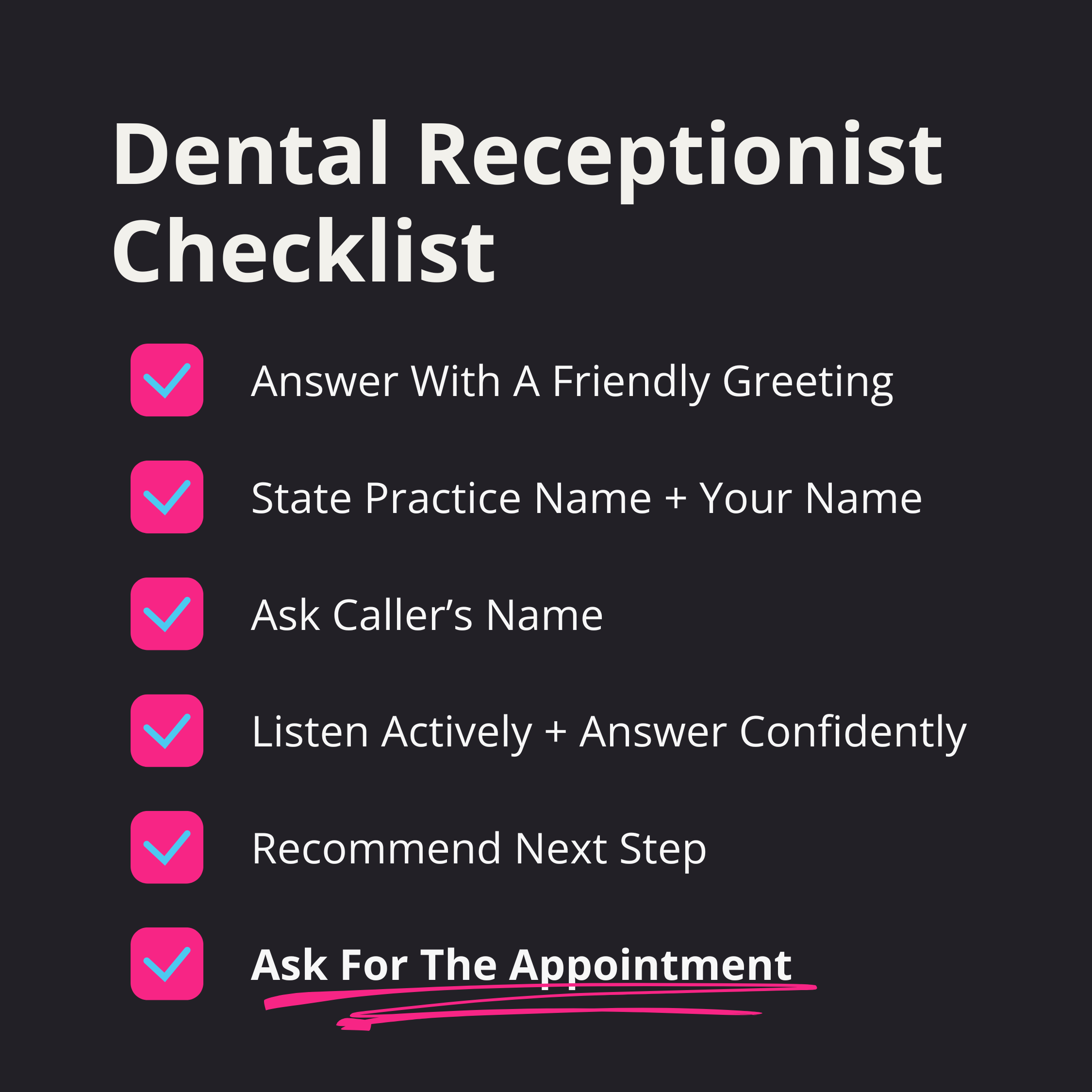
When answering the phone, make sure the first greeting includes both the name of the practice and the name of the person answering the phone. If the caller doesn't immediately give their name you should ask for it as soon as possible and then use their name more than once throughout the call to let them know you’ve taken notice of who they are and create a more personal connection. Be polite, upbeat, and patient with every caller. The more time you spend with the caller on the other end, the more they will feel valued and respected. So be patient and demonstrate a willingness to address their needs and concerns.
Your practice builds its reputation with every phone conversation so be intentional about making a good first impression.
Train Your Team to Answer Questions Confidently
Phone etiquette is certainly important but it isn’t enough when the questions start pouring in about what kind of insurance your office takes, whether or not you’re in network, how much does an exam cost, or what kind of clear aligners you use. The person answering the phone should be able to understand the questions being asked and respond quickly with a helpful and appropriate answer. It’s important to have an understanding of office policies, services offered, and what to expect during a visit in order to set expectations and leave the impression that they are getting reliable information from the conversation.
Many common questions can be sufficiently answered and addressed by the receptionist if she is properly trained. Some common questions include:
“Do you take my insurance?”
“Does your office have a payment plan?”
“How do I send my dental records to your office?”
However, some first-time callers may have more complex questions related to treatment, policies or payment that, reasonably speaking, a front desk staff member will be unable to answer or address. For questions better handled by another staff member, a dental receptionist or front desk team member must know or be able to quickly determine the following:
Who is the best person to address the issue
How to 1) properly transfer the call, OR 2) collect the caller’s information for follow-up
What next steps a caller can expect and an estimated timeline for follow-up
For offices with frequent staff turnover, an inbound call “cheat sheet” should be kept at the front desk for easy reference and to minimize lost opportunities.
Guide Every Conversation Toward Scheduling an Appointment
If you succeed in the above two points and impress your caller with friendliness and competence, then you will have also earned the right to direct the conversation toward setting an appointment. This is where it’s important to know how to transition from only listening and responding to actually proposing the next step. Of course, context should always determine the next step. No one wants a robotic push towards an action that is not relevant, but ultimately the conversation should funnel into a finite list of outcomes aimed at helping them take the step of booking an appointment.
Whether the next step is a consultation appointment, an exam and cleaning, or something else, make sure you ask clearly if the caller is ready to set an appointment. If the caller called to ask if you take their insurance, you could say “Yes, we absolutely do take that insurance, would you like for me to get you on the schedule to come in for that exam and cleaning?” Or “We are not in network with that insurance, but we do offer an in-house membership plan as an affordable alternative, may I share with you more information about that?” These are examples of always offering a solution and a path that leads the person on the other end to feel comfortable and confident about following your lead to take the next step.
Practical Tips to Improve Dental Phone Conversion Rates
For some offices, especially larger, high-volume dental offices, implementing the following practical tips will help maintain consistency in phone conversion rates and improve the overall patient experience.
- Assign at least 2 staff members to handle inbound phone calls. Having multiple people capable of answering the phone allows each employee to spend more time with the caller rather than rushing through conversations or letting calls go unanswered during busy periods.
- Write a script and have your trained team members practice through role play. A well-designed phone script helps ensure every caller receives consistent, accurate information while still allowing room for natural conversation. Regular role-playing builds confidence so team members can handle real conversations more comfortably and effectively.
- Chart conversation flow to ensure questions are answered or directed appropriately. A simple call flow chart posted near each phone can help team members quickly answer common questions and know when to transfer a caller to another staff member. Consider including a quick reference guide with office policies, financing options, insurance information, and each team member’s area of expertise.
- Establish reliable data collection, tracking and follow-up procedures. Every prospective patient call should result in clear documentation and defined next steps. Train team members on what information to collect, where to record it, and how to follow up consistently. The person answering the phone should be able to gather important details naturally without interrupting the flow of the conversation.
- Track your phone conversion rate. It's not enough to know how many new patient calls your practice receives—you should also know how many of those calls result in scheduled appointments. Tracking your phone conversion rate helps identify training opportunities, measure the effectiveness of your marketing campaigns, and improve your return on investment over time.
Common Mistakes That Cost Dental Practices New Patients
Sometimes the simplest mistakes can be the costliest. When training your front desk staff or receptionist, make sure they avoid the following common pitfalls that can result in a lost opportunity:
- Putting callers on hold immediately
- Sounding rushed
- Saying “I don’t know”
- Quoting fees without building value
- Never asking the caller to book an appointment
- Ending the call without confirming next steps
Final Thoughts About How Handling Inbound Phone Calls Impacts Dental Marketing
Your front desk person is the face and voice of your practice to every prospective new patient. Every marketing campaign ultimately succeeds or fails at the moment a prospective patient picks up the phone. By training your front desk team to create a great first impression, answer questions confidently, and guide conversations toward scheduling, you'll maximize the return on every marketing dollar your practice invests.
Ready to increase inbound new patient calls for your dental practice?
 855.212.8393
success@edifydental.com
6510 Abrams Rd
Suite 600
Dallas, TX 75231