How Dental Practices Should Respond to Negative Reviews
Online reviews have become one of the most influential factors in a patient's decision to choose a dentist. While positive reviews build trust and attract new patients, every growing practice will eventually receive a negative review. The good news is that one bad review rarely damages your reputation—how you respond is what prospective patients notice most.
If you are launching or currently managing a dental practice of any specialty or size, knowing how to respond to a bad review can make all the difference in mitigating the potentially negative impact it can have on your practice.
Statistics About Online Reviews
How Negative Reviews Can Help Your Online Reputation
One or two bad reviews will not ruin your practice’s reputation. In moderation, bad reviews can actually help your online reputation. Consumers generally assume nothing is perfect, so when a business review page shows only positive reviews, they may think the company is hiding negative reviews or that the reviews are fake.
Responding to the negative review and showing that you are trying to resolve the situation shows potential patients that your practice cares about them and is making an effort to satisfy them. Taking time to respond to a complaint also demonstrates that your practice cares about its reputation and is responsive.
While a prospective patient can overlook a few bad reviews, consistent and recent negative reviews will start to impact your practice reputation and undermine your practice’s marketing efforts. Be sure your practice has a review collection strategy in place as an effective means of improving your online reputation.

Why Responding to Negative Reviews Matters
Online reviews are a powerful tool for practice growth. Platforms such as Google, Facebook, Yelp and others offer patients an opportunity to share their experiences with the world, which influences your practice reputation and impacts the perception potential patients have of your practice.
For some dentists and practice owners, a negative review may seem inconsequential in the grand scheme of practice growth, but the reality is that online reviews are one of the most trusted sources of information for potential patients and should not be ignored. Statistics about the impact of reviews on patients choosing a new dental practice state that 84% of patients trust online reviews and over 70% of potential patients read reviews to learn about the quality of your dental service. Negative reviews are not just little pieces of information hiding in a corner of the digital expanse. Those reviews are like a megaphone, loudly communicating to your community AND potential patients what they can expect if they choose you as their dentist.
More than that, negative reviews also provide insight into your staff and practice operations. Dentists often spend most of their day focused on patient care and may not always see every interaction patients have with the front desk, insurance coordinator, or scheduling team. Both positive AND negative feedback helps dentists and practice owners experience their office from the patient’s perspective, which can be helpful for any dentist interested in continued growth and excellence in their practice.
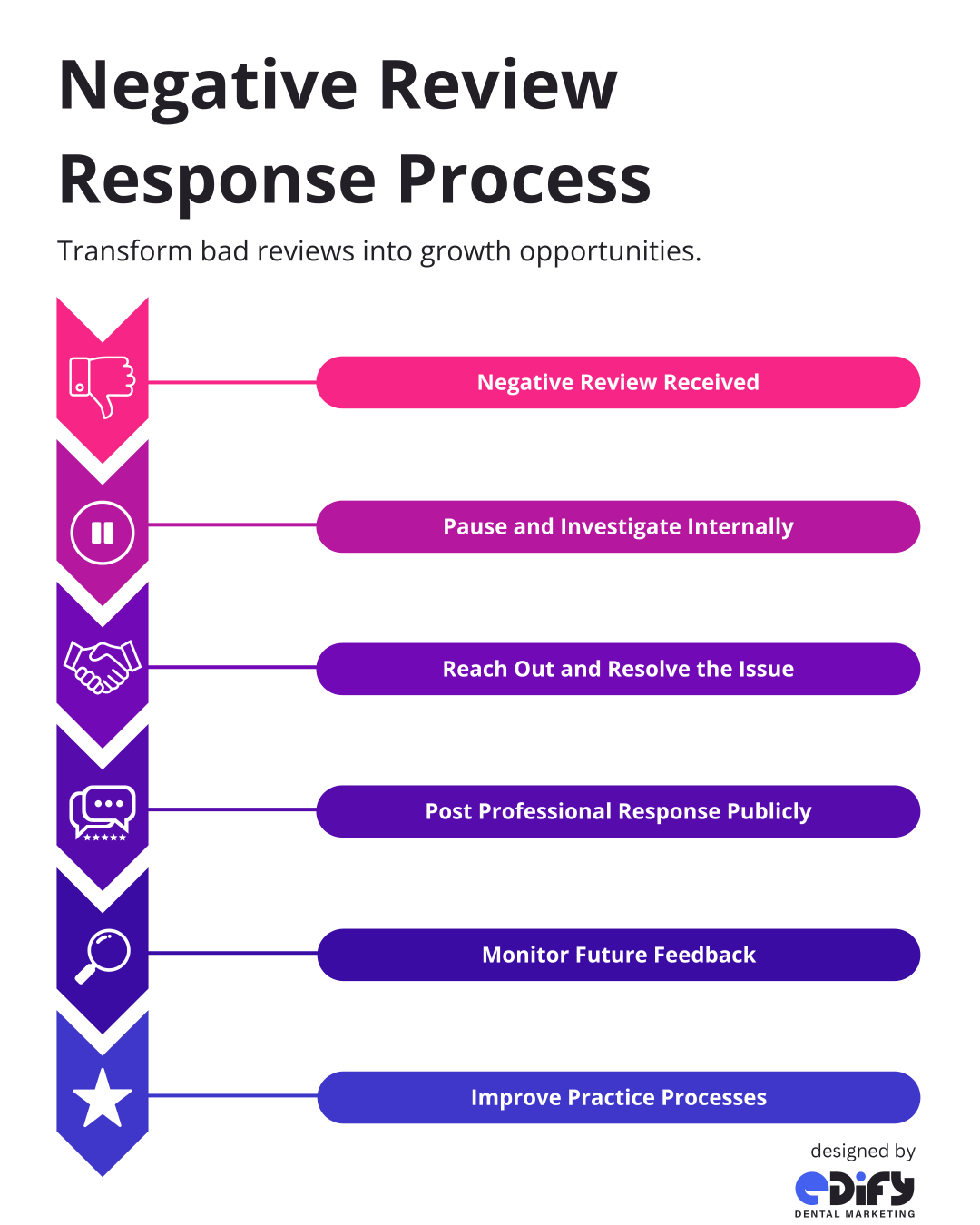
Key Strategies to Effectively Manage and Respond to Bad Reviews
Tip 1: Resolve the Issue Offline First
Before responding publicly to a negative review left on Google, Facebook or any other social platform, a representative of the office should attempt to resolve the issue personally and offline with the patient. The practice owner, dentist or office manager should consider taking the time to make a phone call to address any specific complaints. Depending on the specific situation or the details included in the review, you may want to reach out as soon as possible to help restore and preserve the practice-patient relationship.
Although it may feel natural to be defensive when you see a negative review of your practice, the best way to handle negative feedback is to pause and take a moment to feel calm before responding. Do not reach out to a patient if you feel upset or angry.
Before making the phone call, be sure you have a clear understanding of the patient’s actual experience and possible or specific complaints. Also, have a plan already in place for how you intend to resolve the issue. An appropriate introduction in a personal review response phone call should go something like this:
“Hello {Patient Name}, this is {your name} from {practice name}. It has come to my attention that you had some concerns and frustrations about your recent visit. I wanted to personally reach out to hear more about your experience and see what I can do to help.”
If you get sent to voicemail, leave a polite message with a similar introduction and end with an invitation to call you back at your direct number. Plan to follow up with an email or a second phone call at least once if you do not receive a response.
Fortunately, review platforms always offer the option for users to remove or update reviews, which is why it is so important to respond personally to negative reviews. By mentioning that you became aware of their negative feedback through a review, that creates a natural opportunity to request that the review be removed once, and only if, a resolution has been reached.
Tip 2: Listen to Complaints
Use negative reviews as an opportunity to identify areas for improvement and to consider if this is honest feedback. As you begin receiving negative reviews, you may find that some are unwarranted, while others might shed light on ways to improve the patient experience.
Listen to complaints and use the following questions to review the patient’s experience:
- Is our front desk staff welcoming, professional, and helpful?
- Are patients experiencing long wait times?
- Are appointments allowing enough time for patient care and attention?
If you notice recurring complaints, address them promptly by improving staff training, enhancing service quality, or adjusting office procedures. Once changes are implemented, consider updating your response on the review platform to thank the reviewer for their feedback and invite them to return. Consistently identifying patterns in patient feedback allows your practice to solve small issues before they become larger reputation problems.
Tip 3: Respond Publicly to Negative Complaints and Positive Reviews
Responding to both negative and positive reviews demonstrates that you value patient feedback and are committed to excellent care. According to a consumer survey conducted by Brightlocal, businesses that engage with reviews tend to attract more customers.
For negative reviews:
- Respond quickly, ideally within 48 hours.
- Express empathy without admitting fault or confirming details that could compromise patient privacy.
- Keep your tone polite, professional, and solution-focused.
A sample response to a negative review may go something like this:
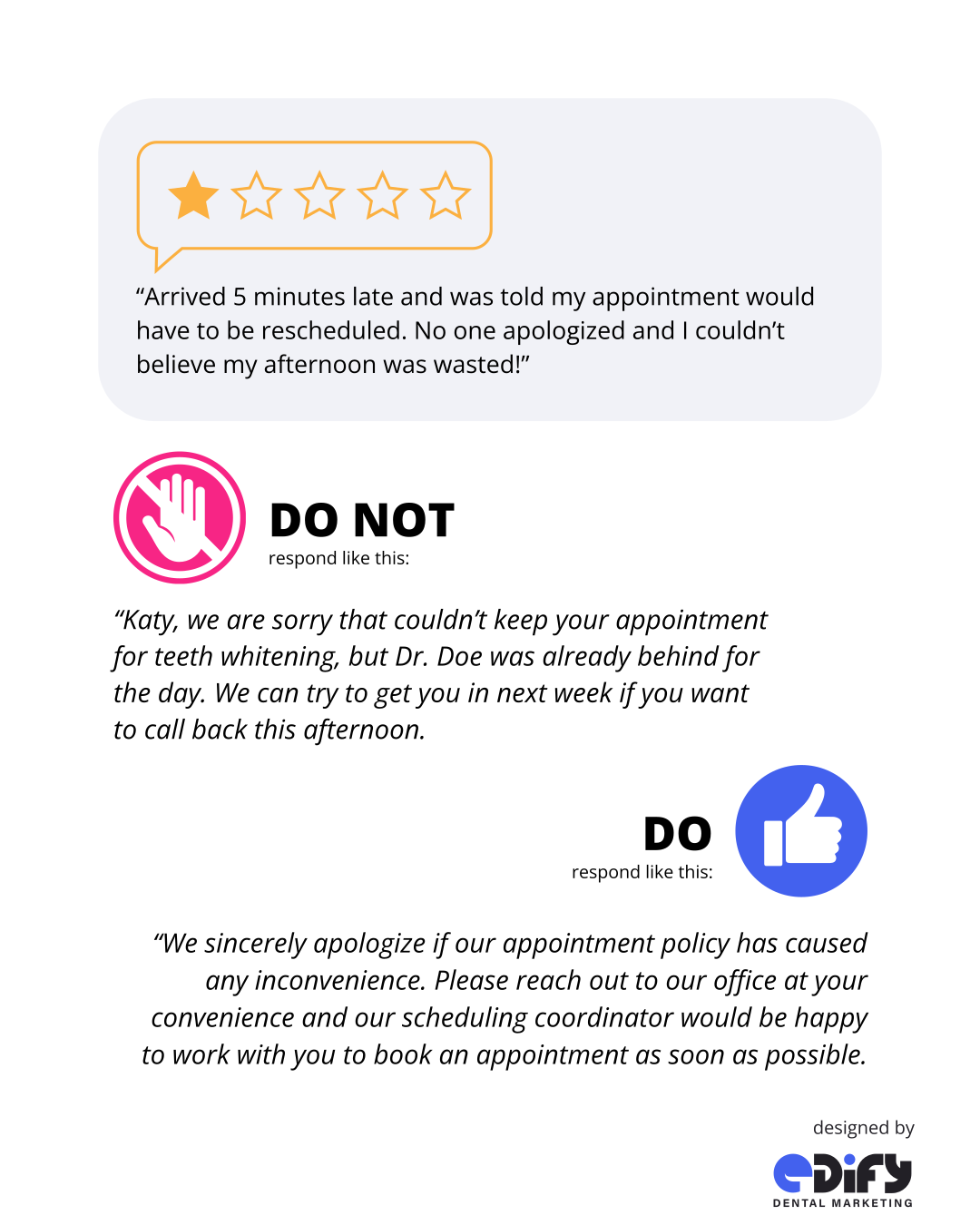
“Thank you for sharing your feedback. Our entire staff is committed to providing the best dental care for our community, and we sincerely apologize to anyone who may have experienced anything less than the highest quality of care at our office. Please reach out to our office manager directly at {office number} to discuss your concerns or share more specific information.”
For positive reviews:
- Thank patients for their kind words.
- Reinforce your commitment to quality care.
Public responses show potential patients that your practice values patient feedback, handles concerns responsibly, and maintains high standards of professionalism.
Tip 4: Encourage Patients to Share Their Experiences
Ask patients to leave reviews during their visit, at checkout, or through follow-up emails. The best time to ask is immediately after a positive patient experience while the visit is still fresh in their mind. Dental hygienists, who spend significant time with patients, are often ideal for this gentle reminder.
Develop a routine for responding to all reviews. Regularly responding to reviews demonstrates that your practice values patient feedback and actively manages its Google Business Profile. While review responses primarily build trust with prospective patients, maintaining an active profile complements a strong local SEO strategy.
Tip 5: Always Prioritize HIPAA Compliance
This should go without saying, but be careful to never divulge any personal health information of your patients. Protecting their privacy and patient rights should always remain a priority. Often a disgruntled patient may share information about their visit, their procedure or other self-identifying information. It is important to never confirm information revealed or interact with any details shared in a negative review. Even if the reviewer publicly shares personal health information, your response should never confirm or expand upon those details.
Important things to NEVER do in any review response, especially negative ones:
- Never confirm someone is a patient.
- Never discuss treatment.
- Never reference appointments.
- Never reference billing or insurance information.
- Never argue publicly.
Frequently Asked Questions About Responding to Negative Reviews
Should dentists respond to negative Google reviews?
Can you remove a negative Google review from your dental office’s Google Business Profile?
What if someone leaves a fake review on my dental practice’s Google Business Profile?
Should dentists apologize in review responses?
How quickly should dental offices respond to negative reviews?
Can responding to reviews improve local SEO?
Final Thoughts on How Dental Practices Can Effectively Respond to Negative Reviews
Your online reputation isn't built solely by collecting five-star reviews—it's built by consistently demonstrating professionalism, transparency, and a commitment to patient care. With the right review strategy, even negative feedback can become an opportunity to strengthen trust and attract more new patients. If your team doesn't have the time to monitor reviews, respond appropriately, and maintain your Google Business Profile, Edify Dental Marketing can help you protect your online reputation while attracting more new patients.
Schedule a free consultation to start building a more successful dental practice today.
 855.212.8393
success@edifydental.com
6510 Abrams Rd
Suite 600
Dallas, TX 75231